Made in Australia: The Reshoring Movement Gaining Momentum
For decades, globalisation shaped the way the fashion and textile industry operated. Manufacturing shifted offshore in pursuit of lower labour costs, larger production capacity and faster scaling. Countries across Asia became the world’s production hubs, while Australia gradually transitioned toward design, branding and retail.
This transformation was not accidental. It unfolded gradually over several decades through a series of policy reforms that opened Australia’s economy to global trade. For much of the twentieth century, clothing and textiles were among Australia’s most protected industries, supported by tariffs designed to sustain local manufacturing jobs.
A significant turning point came in 1973 when Prime Minister Gough Whitlam implemented a landmark 25 percent across-the-board tariff reduction. The decision had a profound impact on the textile, clothing and footwear sector, exposing Australian manufacturers to increasing international competition.
Further structural reform followed in the late 1980s and 1990s under the governments of Bob Hawke and Paul Keating through the introduction of the Textile, Clothing and Footwear (TCF) Plan. This reform agenda scheduled progressive tariff reductions to encourage global competitiveness and industry restructuring. By 1996, most clothing tariffs had been reduced to around five percent.
Tariffs continued to decline over the following decades. Under the John Howard government, scheduled cuts reduced clothing tariffs to 10 percent in 2010 and then to five percent by 2015.
Most recently, on 1 July 2024, the Anthony Albanese government removed the final five percent tariff on clothing and certain household goods, effectively making most apparel imports duty-free. Importers are still required to pay Australia’s 10 percent Goods and Services Tax on the total value of goods, including freight and insurance, but the removal of the final tariff was largely aimed at reducing administrative costs for businesses navigating complex free-trade agreements.
The cumulative effect of these changes has been dramatic. Over several decades, Australia’s clothing manufacturing capacity declined significantly as production moved offshore. Today, approximately 97 percent of Australia’s $28 billion fashion industry is manufactured overseas. (AFC)
However, the conversation is beginning to shift again.
Across the industry there is growing momentum behind reshoring — the movement to bring elements of manufacturing closer to home. For many Australian brands and manufacturers, the question is no longer whether local production is possible, but how it can become part of a more resilient and balanced supply chain.
This shift has been accelerated by recent global disruptions. The pandemic, geopolitical tensions and freight volatility exposed the fragility of long international supply chains. Businesses that relied entirely on offshore production experienced delays, rising costs and limited control over their manufacturing timelines.
In response, many companies are rethinking how and where their products are made. Rather than abandoning global sourcing altogether, the industry is increasingly moving toward hybrid supply chains that combine international manufacturing with local capability to improve flexibility and reduce risk.
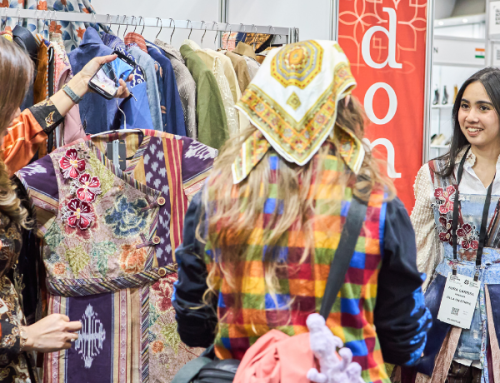
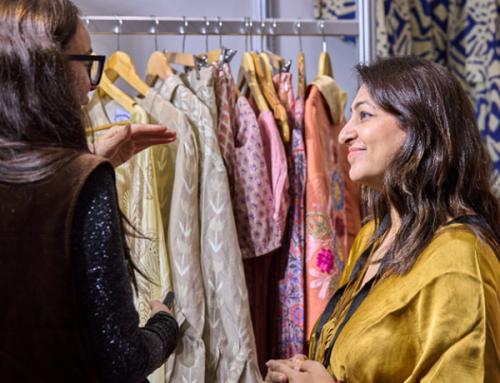
This evolving landscape is reflected in conversations happening across the industry and at events such as the Global Sourcing Expo Australia, where brands, manufacturers and suppliers come together to explore both global partnerships and the future of Australian production.
At the same time, industry leaders are recognising the need for a coordinated national approach to rebuilding local capability. The development of the National Manufacturing Strategy for Fashion and Textiles, led by the Australian Fashion Council in partnership with R.M.Williams, represents the first comprehensive industry-led roadmap to reinvigorate Australia’s textile, clothing and footwear manufacturing sector. The strategy aims to rebuild sovereign capability, support skilled jobs, strengthen supply chains and accelerate advanced manufacturing technologies. (AFC)
Producing closer to market offers several key advantages.
One of the most important is transparency. Consumers are increasingly asking where garments are made, who made them and under what conditions. Local manufacturing allows brands to maintain greater visibility across their supply chains and ensure ethical labour standards.
Speed and agility are also critical benefits. Overseas manufacturing can require lead times of several months, making it difficult for brands to respond quickly to market demand. Local production allows faster sampling, prototyping and smaller production runs, reducing excess inventory and waste.
For manufacturers, proximity also supports deeper collaboration between designers, technicians and production teams. In sectors such as knitwear and technical textiles, where specialised knowledge is essential, this collaboration can significantly improve product development and quality.
Australia still retains pockets of highly specialised textile knowledge and craftsmanship. Skilled machinists, knit technicians, pattern cutters and textile engineers remain essential to maintaining domestic manufacturing capability. Rebuilding these skills is a central priority identified through the National Manufacturing Strategy, particularly as the industry faces an ageing workforce and critical skills shortages.
Technology is also helping reshape the economics of local production. Advanced knitting technology, automated cutting systems and digitally enabled manufacturing are making smaller, flexible production runs more viable.
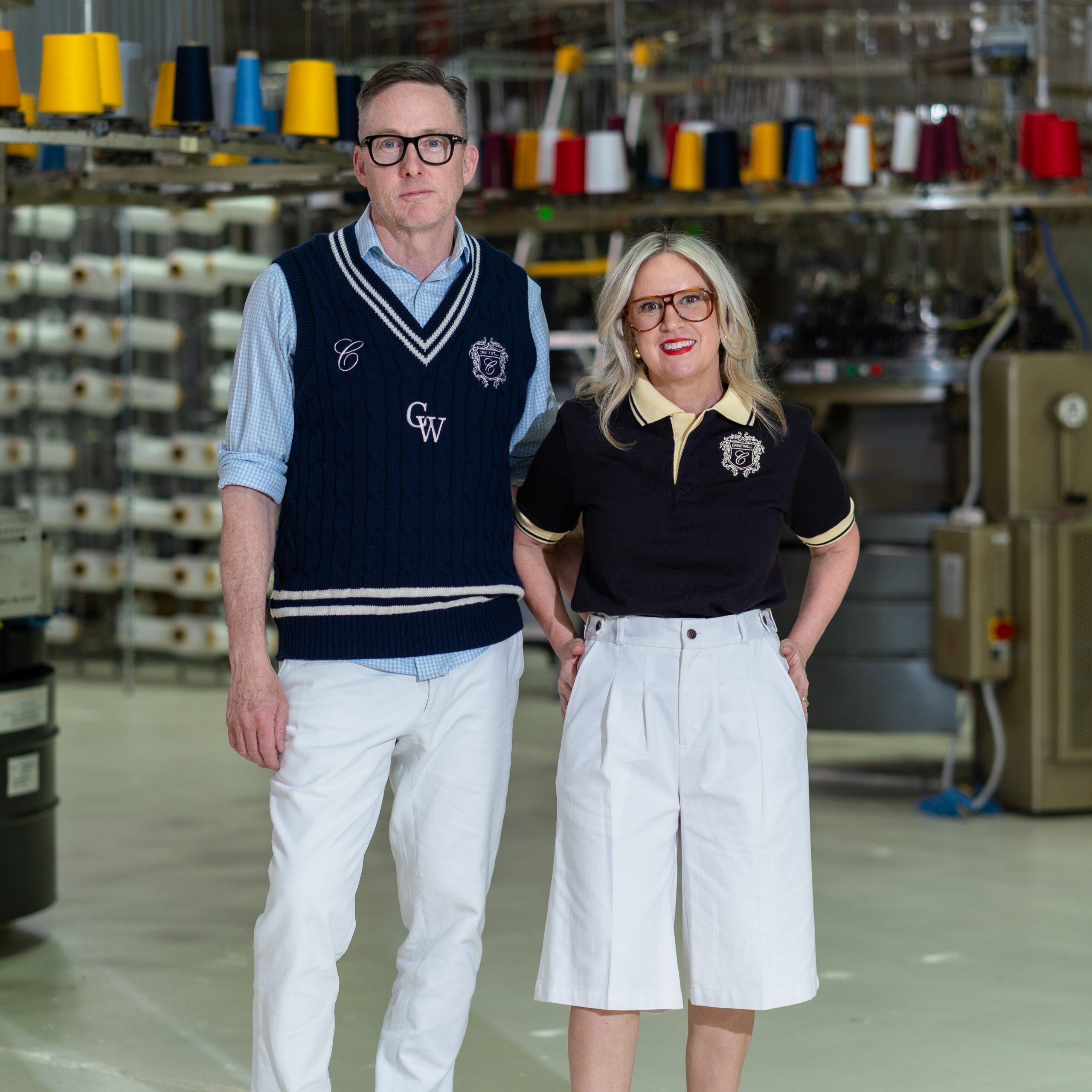
At Silver Fleece, one of Australia’s last fully integrated knitting mills, this balance between heritage skills and modern technology is already shaping the next chapter of local manufacturing. The South Australian mill continues to design, knit, cut and finish garments under one roof, demonstrating how specialised domestic production can support schools, corporate uniforms, sporting organisations and fashion brands.
This approach reflects a broader shift within the industry toward more responsible production models. Instead of producing large volumes months in advance, some brands are exploring ways to manufacture closer to the point of demand, reducing excess stock and minimising waste.
Sustainability is also influencing the reshoring conversation in other ways. Australia produces some of the world’s finest natural fibres, particularly merino wool. As global demand grows for traceable and regenerative materials, there is increasing interest in ensuring more of this fibre can be processed and manufactured domestically rather than exported as a raw commodity.
Rebuilding that capability will require investment and collaboration across industry, government and education. Over several decades much of Australia’s textile infrastructure — including spinning, weaving and garment manufacturing — moved offshore. Re-establishing these capabilities will take time, but the opportunity is significant.
Importantly, the future of Australian manufacturing does not lie in competing with low-cost mass production markets. Instead, the opportunity lies in specialised, high-value production: premium garments, technical textiles, advanced knitting technologies and sustainable fibre innovation.
The reshoring movement is not about looking backward. It is about building a more resilient, innovative and globally competitive industry for the future.
Global sourcing will always remain part of the fashion ecosystem. But as supply chains evolve and technology advances, local manufacturing is once again becoming part of the conversation.
For many Australian brands, “Made in Australia” is no longer simply a label of origin. Increasingly, it represents transparency, quality, sustainability and long-term value.
And in a rapidly changing global market, those qualities are becoming more important than ever.
Melanie & Dean Flintoft
Event Details
Global Sourcing Expo Sydney 2026
Tuesday 16 – Thursday 18 June 2026
International Convention Centre Sydney
Free trade registration: www.globalsourcingexpo.com.au
Media Enquires: Darshana Amarsi darshana.amarsi@iecgroup.com.au